Stories about a Bicentennial quarter worth $1 million circulate online, but most are misunderstanding or exaggeration. This article explains what the Bicentennial quarter is, what actually creates high value, and practical steps you can take if you find one in your pocket.
What Is the Bicentennial Quarter?
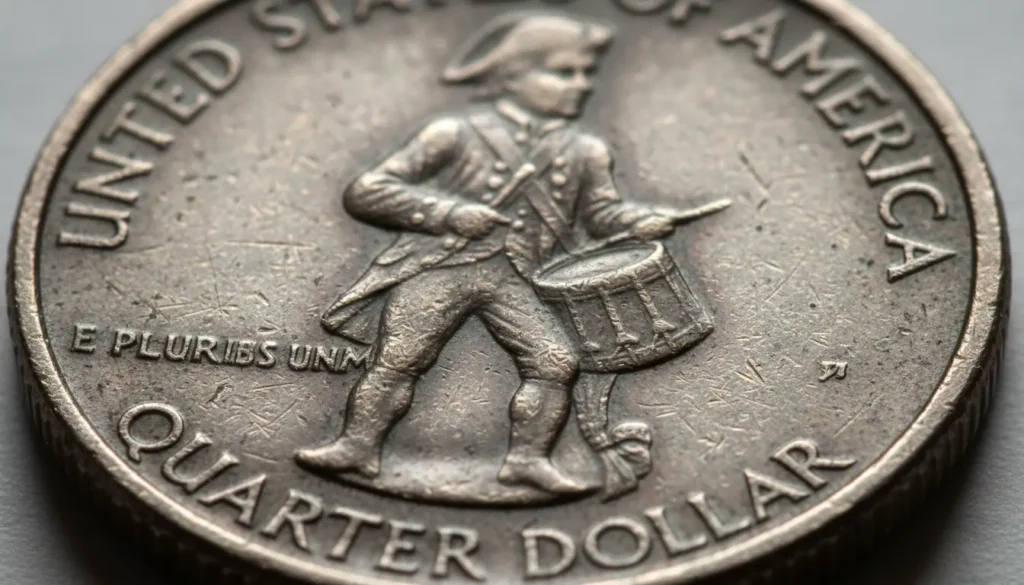
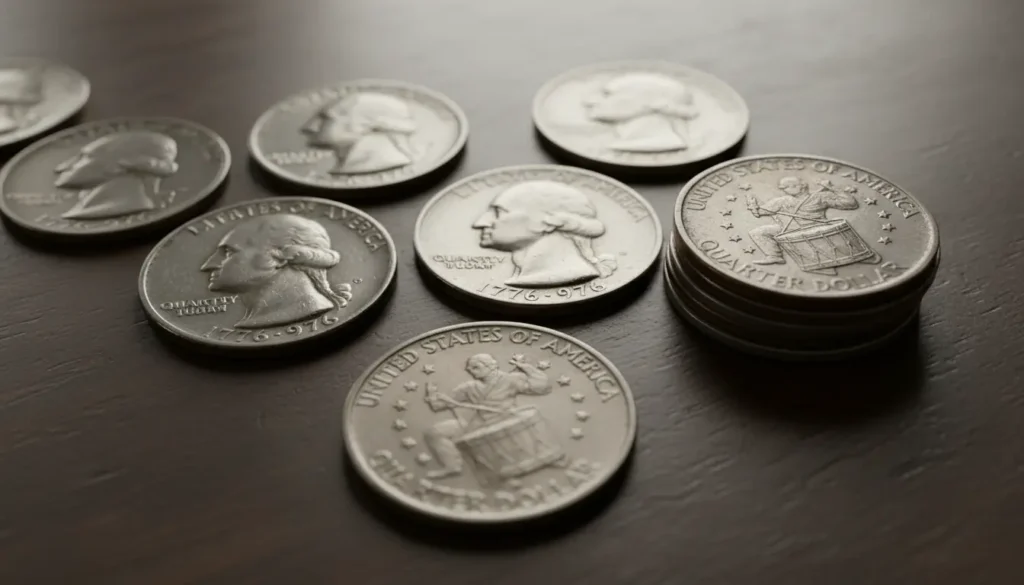
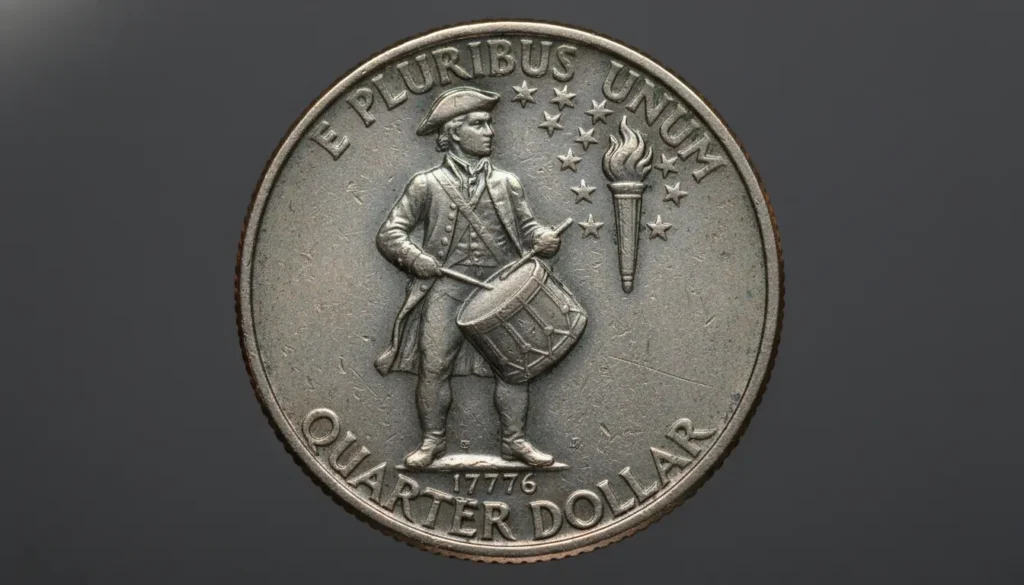
The Bicentennial quarter was issued in 1975–1976 to mark the 200th anniversary of the United States. It replaced the regular reverse with a special drummer design and carries the dual date 1776–1976.
Millions were struck for circulation and for special proof and uncirculated sets. The high mintage makes most Bicentennial quarters common and worth only face value or modest premiums in circulated grades.
Bicentennial Quarter design and mintage
The reverse shows a Colonial drummer and a victory torch encircled by 13 stars. The obverse retains Washington but shows the dual date. Many were produced at Philadelphia and Denver; some proofs came from San Francisco.
Because of large production numbers, only unusual errors, special strikes, or exceptional condition coins attract real collector interest.
Why Some Think a Bicentennial Quarter Could Be Worth $1 Million
Claims of million-dollar values usually hinge on one of three ideas: extreme rarity, dramatic mint errors, or coins with an important provenance. Each of these can raise value, but the threshold for seven figures is extremely high.
In reality, most error Bicentennial quarters sell for a premium measured in hundreds or thousands of dollars, not millions.
Types of rare Bicentennial Quarter varieties
- Die errors: major die breaks, cuds, or broadstrikes that produce unusual surfaces.
- Double die strikes: visible doubling on the date or lettering that is well-documented and scarce.
- Off-metal or planchet errors: very rare cases where a coin was struck on the wrong metal or an unusual planchet.
- Proof and special mint sets: high-grade proof coins with deep cameo contrast can be valuable to specialists.
How to Check If Your Bicentennial Quarter Is Valuable
Follow a practical checklist before you assume you found a fortune. Accurate assessment takes inspection, research, and often a professional opinion.
Simple steps to inspect your Bicentennial quarter
- Examine the date and mint mark. Look for 1776–1976 and any mint letter (D, S, or no letter for Philadelphia).
- Check for obvious errors: doubling, die cracks, missing elements, or off-center strikes that are extreme.
- Look for unusual surfaces: planchet color that suggests silver (proof or special strikes) or other metal.
- Use a loupe or magnifier (10x) to inspect details; photos can help when asking online groups or experts.
- Do not clean the coin. Cleaning often destroys collector value.
Getting Professional Authentication and Grading
If a coin shows an unusual error or appears to be in exceptionally high grade, the next step is professional grading. Grading companies like NGC and PCGS will authenticate, grade, and encapsulate the coin.
Authentication proves the error is genuine and not post-mint damage. Grading places a market-recognized condition on the coin, which helps set an accurate price at auction or sale.
The Bicentennial quarter bears the dual date 1776–1976 and features a Colonial drummer on the reverse. Although minted in 1975–76, the coins were all dated 1776–1976.
Real-World Example: A Small Case Study
A collector found a Bicentennial quarter with a clear die crack and signs of doubling on the drum and lettering. After photographing the coin and posting to a reputable numismatic forum, the collector was advised to submit it for third-party authentication.
After grading, the piece was listed at auction. It sold for a premium over face value — in the hundreds to low thousands range depending on grade and collector interest. This shows real premiums are possible, but they are usually far from seven-figure sums.
Practical Advice: Selling or Insuring a Bicentennial Quarter
If you believe you have a valuable Bicentennial quarter, follow a cautious path toward sale. Proper authentication, high-quality photos, and using reputable auction houses or dealers is key.
Consider these options:
- Submit coin to NGC or PCGS for authentication and grading.
- Request an auction estimate from a trusted numismatic auction house.
- Get multiple opinions from certified dealers before accepting an offer.
- Insure very valuable coins and keep documentation of provenance and grading.
Final Assessment: Could a Bicentennial Quarter Be Worth $1 Million?
It is extremely unlikely a Bicentennial quarter would reach a $1 million value. To approach that level, a coin would need to be unique or tied to an extraordinary historical context, and even then professional collectors typically set seven-figure prices only for the rarest in the rarest series.
Most legitimate rare Bicentennial quarter sales are in the hundreds to tens of thousands of dollars depending on the error, grade, and demand. The practical step is to inspect, document, and seek authentication rather than assume instant wealth.
If you find a Bicentennial quarter that appears unusual, photograph it, avoid cleaning, and consult a reputable grading service or dealer. That is the best route to discover whether your pocket change might be worth more than its face value.