What is the Bicentennial Quarter?
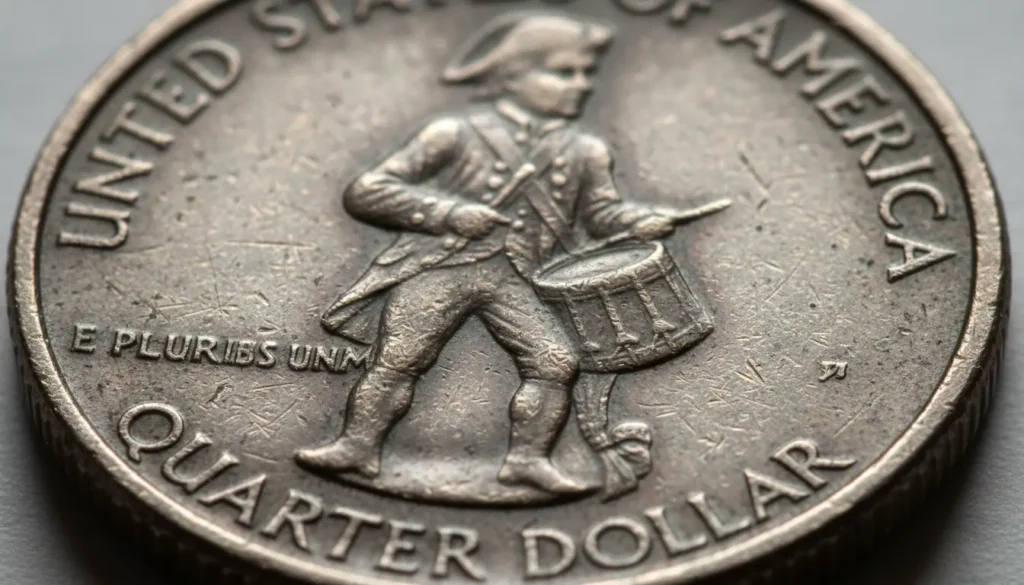
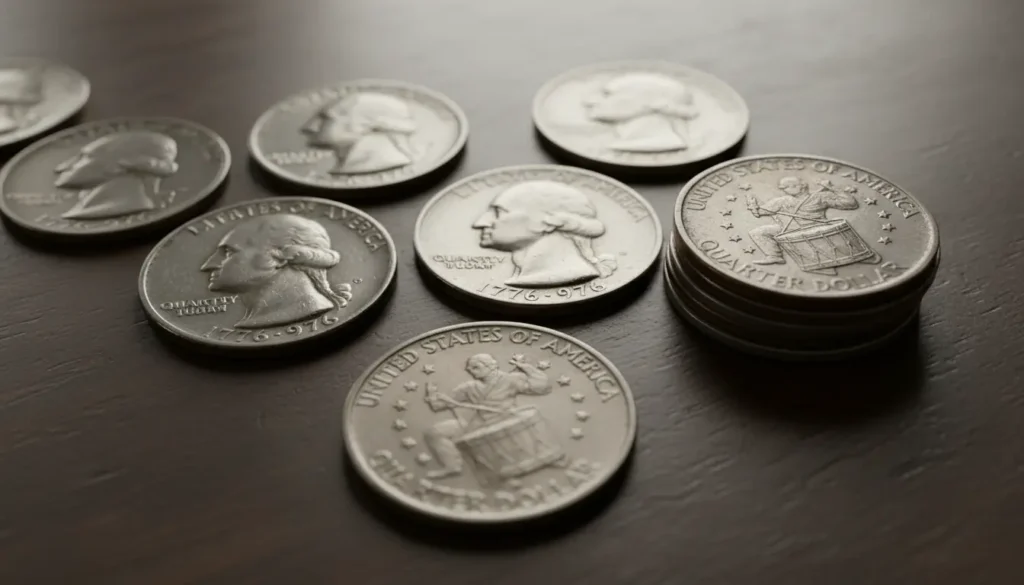
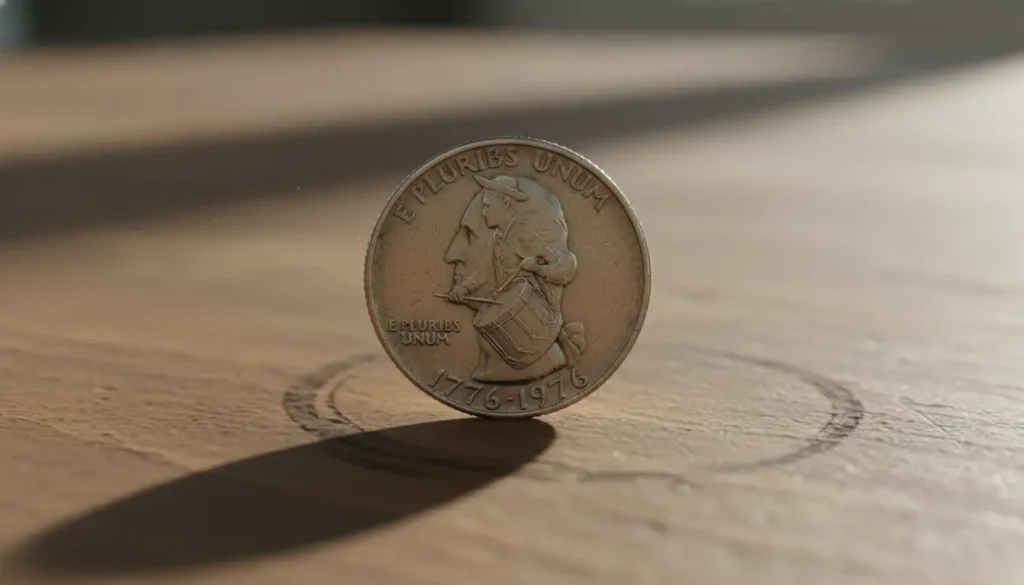
The Bicentennial quarter was issued in 1975–1976 to celebrate the 200th anniversary of American independence. The reverse design shows a colonial drummer and dual dates 1776–1976.
Millions were minted for circulation and for special sets, so most Bicentennial quarters are common and worth face value or only modest premiums.
Could your Bicentennial quarter be worth $1 million?
In straightforward terms: it is extremely unlikely. No mainstream, authentic Bicentennial quarter in standard strikes has ever reached million-dollar values on the open market.
However, a tiny number of coins with major errors, extreme rarity, or extraordinary provenance can sell for very high sums in numismatic auctions. That does not mean typical pocket change will be worth such amounts.
Why some Bicentennial quarters have higher value
Several characteristics increase a Bicentennial quarter’s value. Collectors and dealers look for condition, composition, mint errors, and provenance.
- Condition and grade: Coins graded MS (Mint State) or PR (Proof) at very high levels (MS65+, PR68+) command higher prices.
- Silver composition: Proof quarters struck at San Francisco in 1976 were made in 40% silver for special sets; these are worth more than copper-nickel circulation strikes.
- Errors and varieties: Off-center strikes, broadstrikes, doubled dies, clipped planchets, and repunched mint marks can be valuable if dramatic and authenticated.
- Rarity and provenance: Unusual production mistakes or coins with documented historical ownership can fetch premium prices.
Common valuable Bicentennial quarter types
Here are types to check for when you suspect a Bicentennial quarter might be rare.
- 1976-S Proof 40% silver quarters (sold in silver proof sets)
- Significant mint errors: large off-center strikes, major doubling, or clipped planchets
- Exceptional uncirculated pieces with high numeric grades from PCGS or NGC
What to check on the coin
Look at the obverse and reverse under magnification. Check for unusual details such as doubled letters, missing elements, or an off-center design. Also note the mint mark: D (Denver) or S (San Francisco) will be on most pieces, while circulation strikes have the mint marks absent for Philadelphia in some years.
Examine the edge for unusual errors and verify whether the surface appears silver or copper-nickel. Silver proofs will show a different tonality and strike quality.
The Bicentennial quarter was produced in 1975 and 1976, but all coins struck for general circulation bear the dual date 1776–1976 even when minted in 1975.
How to find out if your Bicentennial quarter is truly rare
Follow a practical process to evaluate a suspect coin. This reduces mistakes and prevents missing genuine value.
- Inspect with a loupe (10x) or magnifier for errors and grade signs.
- Compare to reference photos of common errors and certified rare examples online and in catalogs.
- Weigh the coin and compare diameter and thickness to standard specifications to detect composition differences.
- If the coin looks unusual, have it professionally graded and authenticated by a major service such as PCGS or NGC.
Where to get a second opinion
Local coin dealers or club members can give initial guidance. For coins that appear valuable, submit them to a third-party grading service. Grading provides condition certification and greatly helps when selling at auction or to collectors.
Case study: A realistic collector find
Jane, a casual collector, bought a roll of quarters at a bank and found a 1976-S Bicentennial quarter that looked different. It had a mirror-like surface and a subtle hairline handling typical of proof coins.
She compared it to images online and noted the S mint mark and proof-like strike. After sending it to a grading service, it was confirmed as a 1976-S 40% silver proof in high grade. While not worth a million dollars, the coin sold at auction for a respectable premium over face value and covered her grading and purchase costs.
How much might a valuable Bicentennial quarter sell for?
Price ranges vary widely. Most circulation strikes are worth face value or a small premium. Certified high-grade circulation strikes and common silver proofs can fetch tens to a few hundred dollars. Significant errors and exceptional proofs may sell for thousands.
Only truly extraordinary examples with documented rarity or historic provenance could reach well into five-figure or higher territory, and even then, million-dollar results are essentially unheard of for this series.
How to sell a potentially rare Bicentennial quarter
If you believe you have a rare coin, follow these steps to maximize value and protect yourself.
- Document the coin with clear photos and notes on how and where you found it.
- Get a professional grade or authenticity opinion from PCGS or NGC if the coin appears valuable.
- Seek multiple offers from reputable dealers or list the coin at auction for wider collector exposure.
- Keep records of provenance and grading to support the sale price.
Final practical advice
Check your change if you enjoy coin hunting, but keep expectations realistic. Most Bicentennial quarters are common, and while valuable coins exist, they are rare.
If you suspect a rare find, use magnification, compare to trusted references, and if warranted, get the coin professionally graded before attempting a sale.