The 1976 Bicentennial quarter sparked interest when it was issued, and collectors still hunt for rare varieties today. This guide explains what makes a Bicentennial quarter valuable, realistic price ranges, and the steps to verify a potentially rare coin.
What is the Bicentennial quarter?
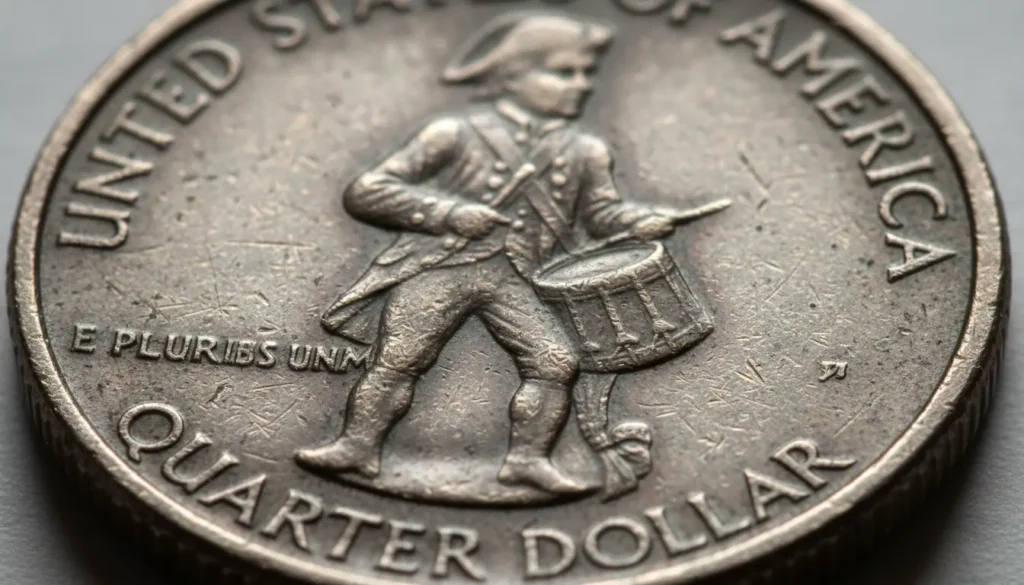
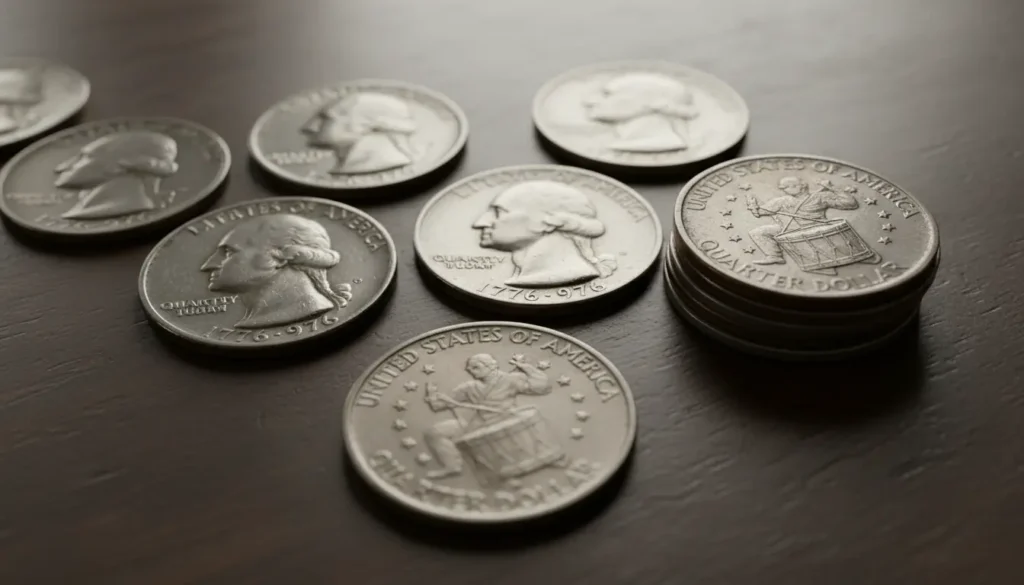
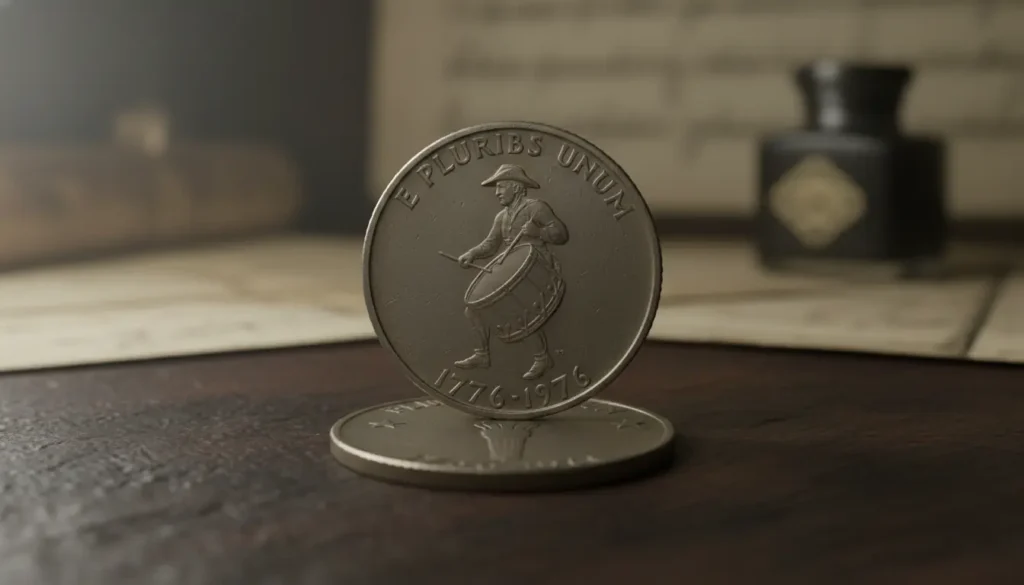
The Bicentennial quarter was issued in 1975 and 1976 to mark the 200th anniversary of the United States. It features a special reverse design showing a colonial drummer and a torch encircled by 13 stars.
Most Bicentennial quarters are common modern coins struck for circulation or as proofs. A few varieties, errors, and silver-clad pieces are the ones that attract serious collector interest.
Design, mintage, and types
There are three main types of Bicentennial quarters: business strikes, proof strikes, and special silver-clad proof sets. Business strikes were produced for circulation at Philadelphia and Denver. Proofs came from San Francisco. Special silver-clad coins were included in limited proof sets.
Understanding these types helps separate ordinary examples from those that could have collectible value.
Which Bicentennial quarters are rare?
Rare Bicentennial quarters fall into a few categories: genuine mint errors, limited silver examples, and high-grade proofs. Each category has different value drivers.
- Silver-clad 1976-S proof quarters from special sets
- Major mint errors: off-center strikes, double strikes, broadstrikes, and clipped planchets
- Proof or business strikes with strong die doubling or unusual die breaks
- High-grade examples professionally graded MS67/MS68 or PR68/PR69
Common error types to watch for
Errors that can raise value include:
- Off-center strikes (the more off-center, the higher the interest)
- Die cracks and die breaks that create distinctive raised lines
- Double die obverse or reverse with clear doubling of lettering or images
- Wrong planchet or clipped planchets
How to identify a rare Bicentennial quarter
Start with basic, non-destructive checks at home. These steps will help you decide whether to seek professional grading or appraisal.
- Inspect with a magnifier or loupe for doubling, die cracks, or unusual surfaces.
- Weigh the coin on a precise scale. Genuine silver-clad proof quarters have a slightly different weight than copper-nickel circulation strikes.
- Measure diameter and thickness with calipers; compare to standard 1976 quarter specs.
- Check the edge for reeding consistency; some errors affect the edge.
- Do not clean the coin. Cleaning lowers value and can harm diagnostic surface details.
Could your pocket change be worth $1 million?
Realistically, a Bicentennial quarter reaching $1 million is extremely unlikely. Coins that sell for that amount are usually extremely rare historic types or unique pieces with documented provenance and extraordinary condition.
Bicentennial quarters, even with dramatic errors or top grades, generally sell in a wide but far lower range. Typical high-value sales for notable Bicentennial errors or silver proofs are more often in the hundreds to low five-figure range, not near $1 million.
Factors that limit million-dollar potential
- High surviving population for most Bicentennial issues
- Relatively modern production methods and documentation
- Collecting demand is strong but not at the level for key-date classic coins
- Major sales records show other coin types dominate the multi-million market
The Bicentennial quarter reverse was designed by Jack L. Ahr. Millions were produced, making most circulation examples common today.
What to do if you think you have a rare Bicentennial quarter
If your inspection shows an obvious error or unusual quality, follow these steps:
- Stop handling the coin. Hold by the edges and store in a soft holder.
- Take clear, well-lit photos of both sides and the edge for records.
- Compare to reputable references and auction archives for similar errors.
- Consider submitting to a reputable third-party grading service (PCGS, NGC) for authentication and grading.
- If authenticated, list with coin auction houses or specialist dealers rather than general marketplaces.
Costs and benefits of grading
Grading and authentication add credibility and typically raise sale price, but they cost money and take time. Evaluate potential value before submitting to avoid unnecessary fees.
Example case study
Example (realistic scenario): A collector found a worn Bicentennial quarter with a visible off-center strike. After careful photography and a brief online comparison, the collector submitted the coin to a third-party grader. The grader confirmed a large off-center error, and the graded coin sold through a specialized auction for an amount several thousand dollars above face value. The sale demonstrated that clear, well-documented errors can attract strong interest, though not at the multi-hundred-thousand or million-dollar level.
Final practical tips
Most Bicentennial quarters are common and carry only face or modest collectible value. Use careful inspection and trusted graders to confirm truly exceptional pieces. Managing expectations and documenting provenance will produce the best outcome if you decide to sell.
If you think a coin might be valuable, take clear photos, avoid cleaning or altering it, and seek an expert opinion before listing it for sale.