Why the Bicentennial Quarter Attracts Collectors
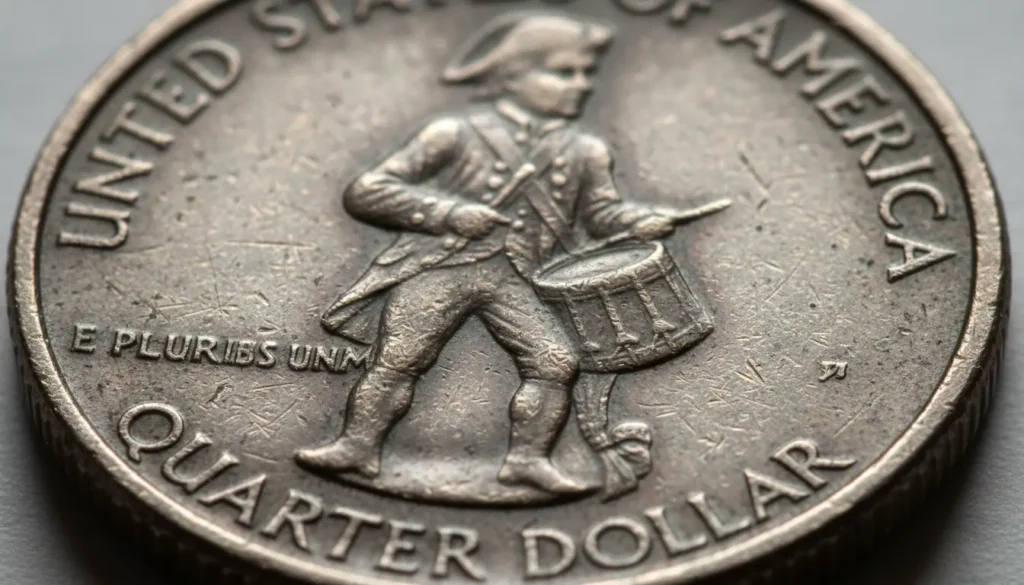
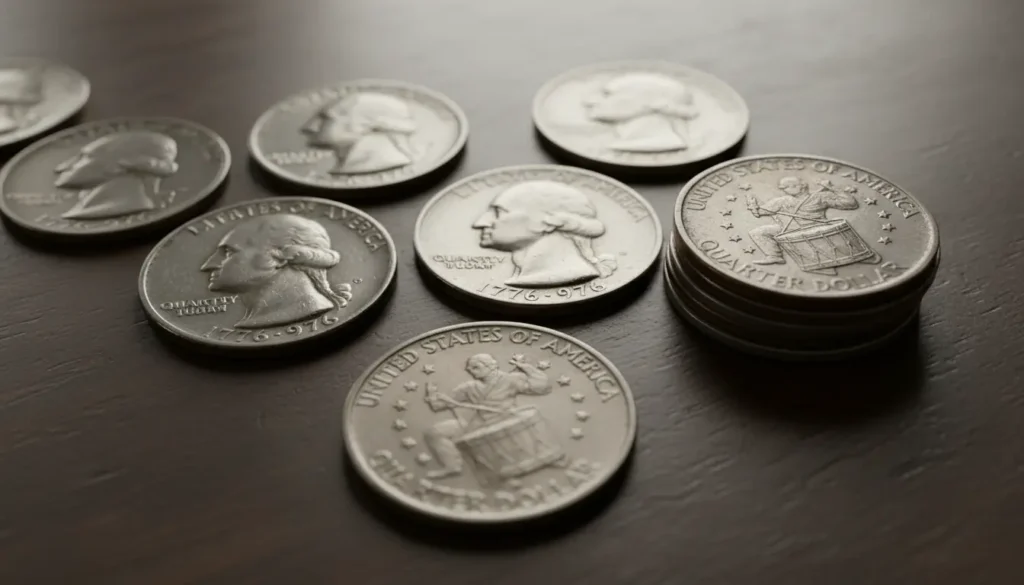
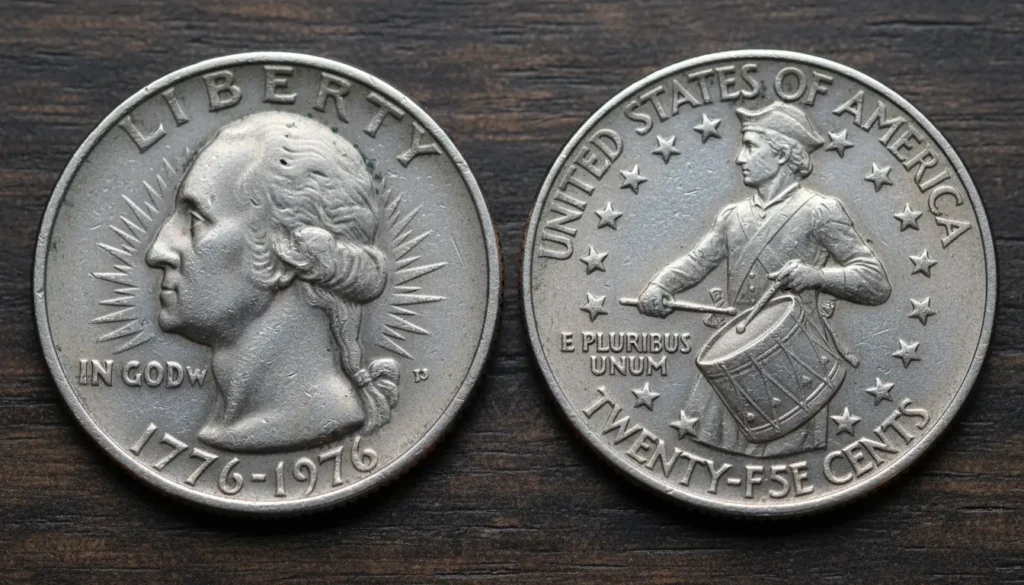
The 1776–1976 Bicentennial Quarter was issued to mark the United States bicentennial and has a distinctive reverse design of a colonial drummer. Millions were minted, so most are common in circulated condition.
Collectors still watch these coins because special mint marks, proof issues, silver compositions, and minting errors can increase value. Understanding what to look for helps you separate ordinary pocket change from a truly rare piece.
How to Identify a Rare Bicentennial Quarter
Start with basic visual inspection and simple tools like a loupe, soft cloth, and magnifying glass. These quick checks will tell you if a coin merits professional attention.
Check the Obverse and Reverse Details
Look for the dual date 1776–1976 on the obverse and the drummer-boy reverse by designer Jack L. Ahr. Clear, sharp details and full mint luster may indicate an uncirculated or proof strike.
Look for Mint Marks and Special Issues
Mint marks include D (Denver), S (San Francisco), and P (Philadelphia, often no mark on quarters). The 1976-S proof quarters were struck in 40% silver for special sets, while circulation strikes are copper-nickel clad.
Silver proofs and original U.S. Mint sets are more valuable than circulated clad examples, but they are still generally modest in value compared with rare older coins.
Search for Minting Errors and Varieties
Errors can significantly raise a coin’s interest. Look for common error types such as:
- Off-center strikes
- Clipped planchets or broad strikes
- Die cracks or die breaks
- Strong doubling (doubled die)
- Wrong planchet or clipped dies
Major, dramatic errors that are unique or extremely scarce are the pieces most likely to attract high collector bids.
Could Your Pocket Change Be Worth $1 Million?
Short answer: extremely unlikely, but not impossible in theory. The market values coins based on rarity, demand, condition, and provenance. Ordinary Bicentennial quarters are common and worth only face value or a few dollars in uncirculated condition.
For a Bicentennial quarter to approach seven figures it would need one or more of these attributes:
- Unique, major mint error never before seen
- Absolute uniqueness (one-of-a-kind) backed by strong documentation
- Extraordinary condition with top-grade certification and exceptional eye appeal
- Historical provenance linking the coin to a famous person or event
Even with these, reaching $1 million requires buyer willingness and a marketplace that values the story and rarity over typical numismatic comparables.
How Experts Price Rare Bicentennial Quarters
Professional coin graders and auction houses look at grade, rarity, and comparables. They place the coin into tiered markets—from collector retail to dealer networks to high-end auction rooms where unique coins reach extreme prices.
Grading services such as PCGS and NGC provide condition grades that most serious buyers rely on. A certified, dramatic error in a high grade is the path that could produce unexpected results.
What to Do If You Think You Have a Rare Bicentennial Quarter
Follow a simple verification and sales path to maximize your chances of a fair outcome. Rushing or poor handling can reduce value.
- Handle carefully: Hold coins by the edges and avoid cleaning them. Wear cotton gloves if possible to prevent surface damage.
- Document the coin: Take clear photos (obverse and reverse) and note any visible errors or marks.
- Compare online: Use reputable numismatic databases, auction archives, and error-coin forums to find similar examples.
- Seek professional authentication: Contact PCGS, NGC, or a trusted dealer for grading and authentication. A formal certification increases buyer confidence.
- Choose a sales channel: For high-value or unique coins, auctions or specialist dealers are preferable. For modest items, local coin shops or online marketplaces may suffice.
The Bicentennial quarter features the dual date 1776–1976 and a drummer-boy reverse. Millions were produced, but San Francisco proof issues used 40% silver for special sets.
Real-World Example: What Usually Happens
A collector once found a Bicentennial quarter with a significant off-center strike in a jar of mixed coins. After photographing the coin and consulting online forums, they sent the piece to a grading service for authentication.
The graded coin attracted offers from specialist error-coin dealers and sold at auction after careful marketing. The sale price was well above face value, showing how proper identification and professional grading can turn a simple find into a meaningful return.
Final Practical Tips for Coin Owners
Most Bicentennial quarters are not rare enough to command astronomical prices, but exceptions exist. Treat every unusual coin with care and verify before assuming it has major monetary value.
- Do not clean or alter suspected rare coins.
- Get professional grading for error or proof candidates.
- Use reputable auction houses or dealers if the coin is certified and rare.
With patience and proper steps, a surprising find can become a rewarding sale. But remember—$1 million for a Bicentennial quarter would be a historical outlier, not the norm.