Why 1976 Bicentennial Quarters Still Circulating Attract Collectors
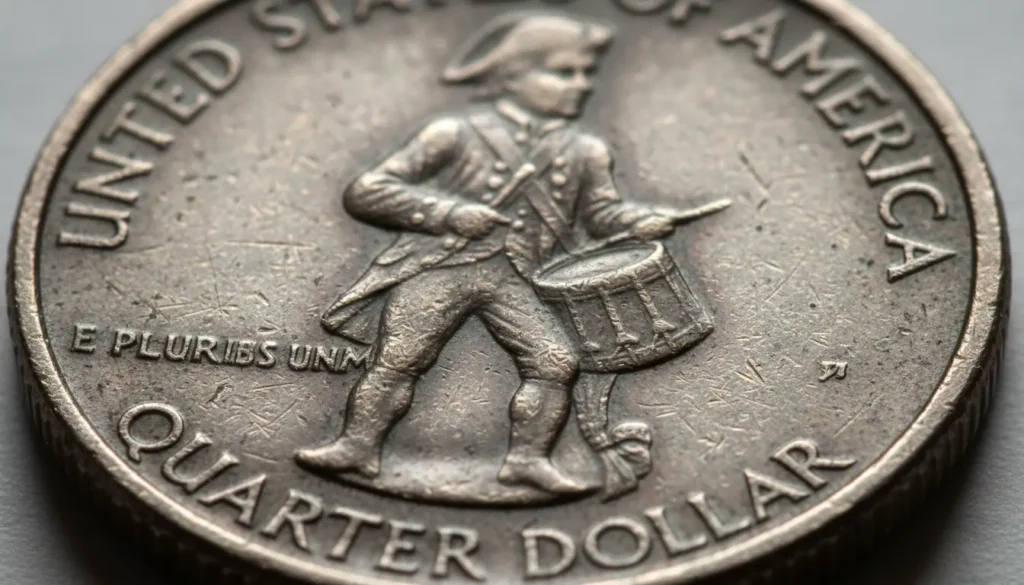
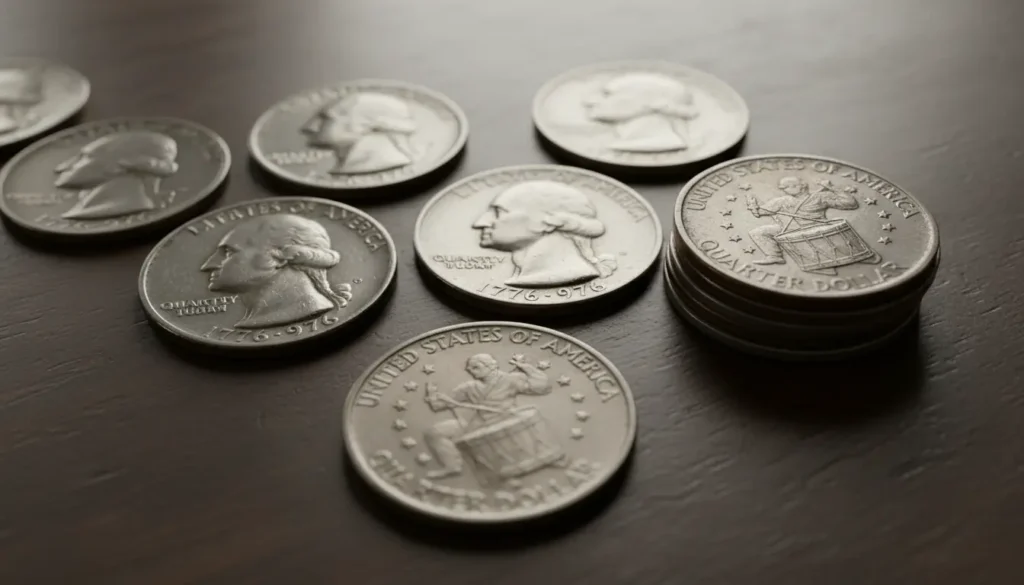
The 1976 Bicentennial quarter celebrated the United States’ 200th anniversary and has a distinctive reverse design featuring a drummer and a torch with 13 stars. Many were struck for circulation, but some versions and rare errors are now sought by collectors.
This guide explains the most collectible and valuable 1976 Bicentennial quarters still circulating, how to spot them, and practical steps to get a realistic value.
Most Collectible and Valuable 1976 Bicentennial Quarters Still Circulating
When people refer to collectible Bicentennial quarters that still circulate, they usually mean specific mint issues, high-grade uncirculated pieces, and noticeable error coins. Each category has its own signs to watch for.
1976-S Silver Proof Quarters
The 1976 San Francisco silver proof quarter was issued in a special 40 percent silver composition as part of proof sets. These are not typical circulation strikes, but some enter the market through inheritances or estate sales and appear in collections or for sale.
Why they matter: the silver content gives them intrinsic metal value above face value, and collectors value their proof finish and limited mintage.
High-Grade Mint State Quarters
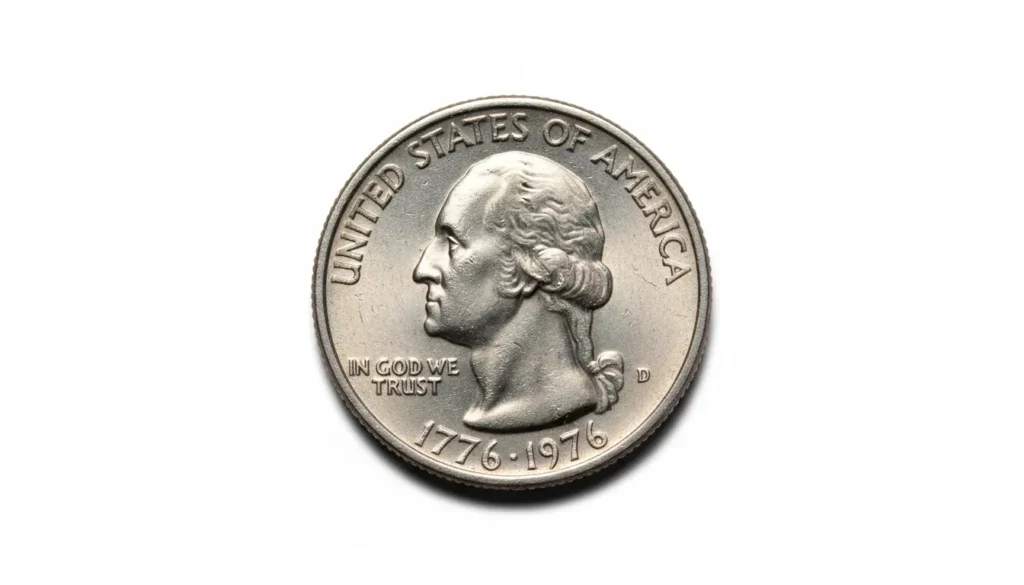
Most circulating Bicentennial quarters are common, but uncirculated pieces graded MS65 or higher can command a premium. Look for sharp detail on Washington’s hair and the drummer on the reverse, plus full mint luster.
Key signs of high grade include:
- Strong, original luster with no dull spots
- Sharp, well-defined strikes
- No heavy bag marks or contact scratches
Error and Variety Quarters
Error coins can be significantly more valuable than typical pieces. Collectors pay attention to several error types for 1976 Bicentennial quarters still in circulation.
- Off-center strikes and clipped planchets
- Broadstrikes where the coin was struck without a properly seated collar
- Struck-through marks where grease or foreign material affects the strike
- Doubled die obverse or reverse varieties when the die shifted during hubbing
Even modestly off-center errors or clear broadstrikes can be worth tens to hundreds of dollars, while dramatic errors can reach thousands depending on rarity and condition.
How to Identify Valuable 1976 Bicentennial Quarters Still Circulating
Follow a systematic approach when you find a possible collectible Bicentennial quarter in circulation. Start with visual inspection and then use tools to confirm.
Tools You Need
- Magnifying loupe 10x
- Soft gloves or clean hands to avoid oils
- Scale and calipers for error measurement if available
- Reference books or reliable online databases for photos and error listings
Steps to Inspect a Coin
- Check the mintmark on the obverse near the truncation of Washington’s neck for P, D, or S.
- Look for signs of proof finish or silver tone; proof coins will have mirrored fields and frosted devices.
- Use a loupe to search for doubled die characteristics, die cracks, or unusual die markers.
- Measure off-center percentages or clipped shapes to estimate error severity.
The Bicentennial quarter reverse design was only meant for 1975 and 1976, but all quarters dated 1776-1976 were struck in 1975 and 1976 and bear that special dual date.
Real-World Example: A Small Case Study
A collector named Maria discovered a deeply off-center 1976 quarter while sorting coins from a jar. She took it to a local coin shop for inspection. The dealer confirmed it as a 15 percent off-center strike and offered a fair purchase price well above face value.
Maria then consigned a similar coin to an auction house, where it sold to a specialist for a higher sum because the error was crisp and visually appealing. This shows that local dealers can provide quick offers, while auction routes may return higher prices for striking or rare errors.
How to Grade, Protect, and Sell Your 1976 Bicentennial Quarters Still Circulating
Accurate grading matters. For the most valuable pieces consider third-party grading for higher-end coins and rare error coins. Grading gives buyers confidence and often increases sale prices.
Protection Tips
- Handle coins by the edges and avoid cleaning them.
- Store in inert flips, coin capsules, or archival holders to retain original luster.
- Keep silver proof pieces in dry, stable environments to prevent toning and corrosion.
Selling Options
- Local coin shops for quick sales and appraisals
- Online marketplaces and auction houses for broader exposure
- Coin shows where specialists may pay premiums for desirable items
Final Practical Advice
Most Bicentennial quarters you find in change will be worth face value, but checking for mintmarks, proof finishes, high-grade condition, and obvious errors can reveal unexpectedly valuable pieces. Use a loupe and trusted references, and consider professional grading for anything that appears rare or pristine.
Being methodical in inspection and patient in selling will help you realize the best value for the most collectible and valuable 1976 Bicentennial quarters still circulating.