What is the 1776–1976 Bicentennial Quarter?
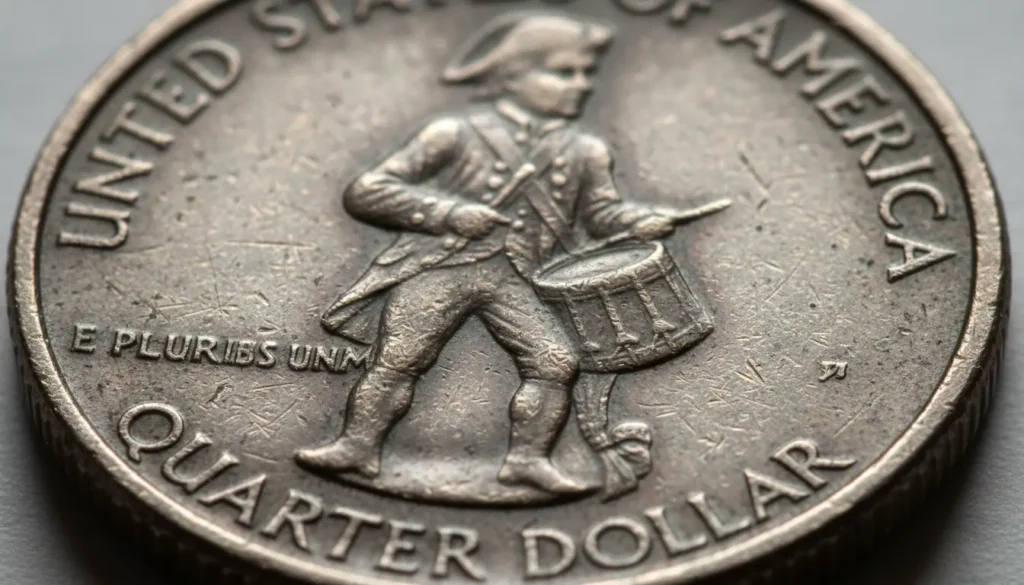
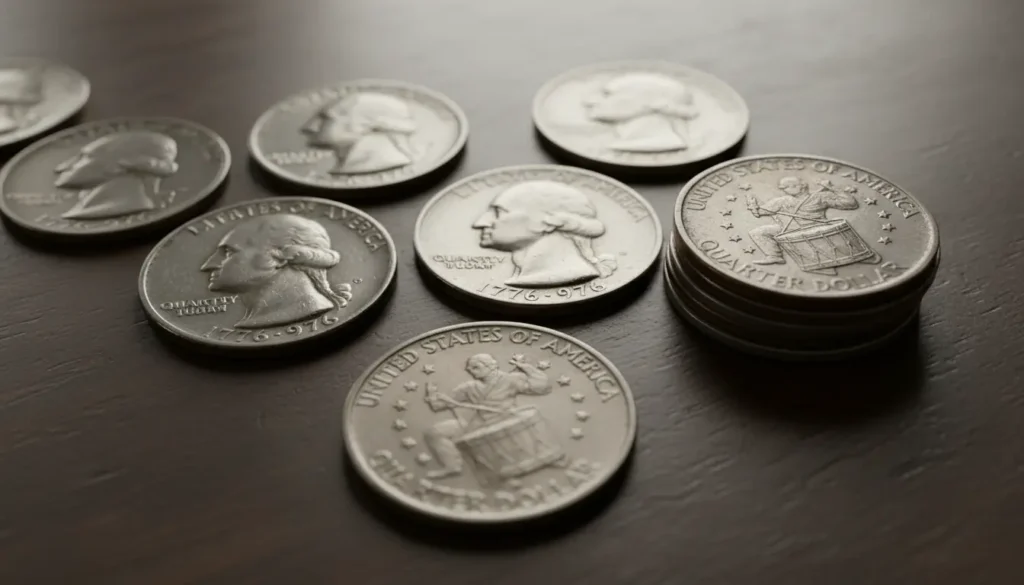
The 1776–1976 Bicentennial Quarter is a special Washington quarter issued to mark the United States bicentennial. Instead of the usual eagle reverse, it features a colonial drummer and the dual date 1776–1976.
These quarters were struck for circulation by the Philadelphia and Denver mints, and special proof and silver versions were struck at San Francisco. Many people still find them in change today.
How to identify a 1776–1976 Bicentennial Quarter
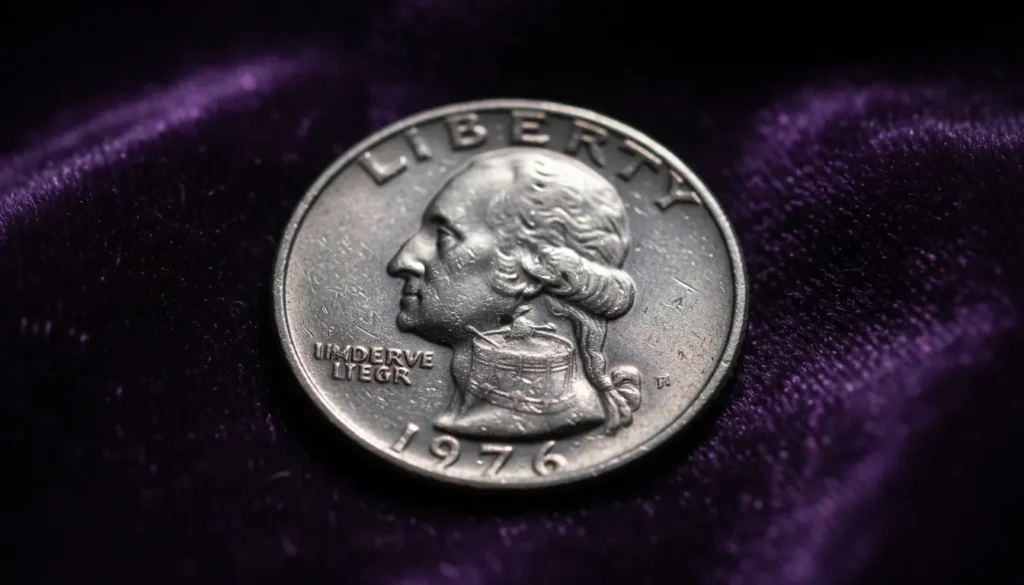
Identification is straightforward if you know what to look for. The reverse shows a colonial drummer and the dates 1776–1976, and the obverse retains Washington’s portrait.
Check the obverse for a mint mark to the right of Washington’s hair ribbon. A plain coin means Philadelphia (no mint mark), a D indicates Denver, and an S indicates San Francisco.
Quick checklist to identify the quarter
- Reverse design: Colonial drummer with 1776–1976
- Obverse mint mark: none (Philadelphia), D (Denver), S (San Francisco)
- Surface and finish: circulation strike vs proof finish
- Edge: reeded, but silver pieces may show a slightly different tone
Why some 1776–1976 Bicentennial Quarters are rare
Most Bicentennial quarters are common because millions were produced for circulation. Rarity arises from special finishes, silver content, and striking errors.
Key factors that make a Bicentennial quarter rare include proof strikes from San Francisco, 40 percent silver composition used in some collector sets, and striking errors like doubled dies or off-center strikes.
Types of rare varieties
- 1976-S Proof and silver-clad proofs
- Error coins: doubled die obverse or reverse, off-center strikes, broadstrikes
- High grade uncirculated pieces with full luster and no wear
How to check condition and mint marks for value
Condition matters more than age for common modern coins. Examine the coin under good light with a loupe or magnifier to check for wear, contact marks, and full luster.
Look for mint marks on the obverse and compare the finish to known proof or uncirculated examples. If you suspect an error, take clear photos or bring the coin to a dealer or grader for confirmation.
Steps to inspect a candidate coin
- Clean hands and a soft surface to avoid damaging the coin.
- Use a 10x loupe and good lighting to check details on both sides.
- Note any unusual devices, doubled letters, or misaligned strikes.
- Compare to photos in a trusted coin reference or online grading guide.
The Bicentennial quarter was produced in 1975 and 1976 to meet demand, yet every example bears the dual date 1776–1976. Special 40 percent silver pieces were issued only in proof sets from San Francisco.
Value ranges and realistic expectations
Most circulated Bicentennial quarters are worth face value to a few dollars to collectors. Uncirculated examples and common mint-state pieces will fetch modest premiums.
Proofs and 40 percent silver proof coins command higher prices, and certified error coins can be worth significantly more depending on rarity and demand.
What affects price
- Condition and eye appeal
- Mint mark and whether it is proof or circulation strike
- Type of error and how dramatic it is
- Certification by a recognized grading service
How to sell or preserve a rare 1776–1976 Bicentennial Quarter
If you believe you have a rare Bicentennial quarter, do not clean it. Cleaning can reduce value immediately.
For selling, get a professional opinion. Use a reputable dealer, auction house, or online marketplace with buyer protection. Consider third-party grading (PCGS or NGC) for high-value coins.
Practical selling tips
- Gather provenance and clear photos showing both sides.
- Start with a coin dealer for a local appraisal.
- For higher value items, request grading and then sell via auction or certified online listing.
- Compare offers and factor in grading and seller fees.
Real-world example: a pocket find turned short sale
A reader once found a 1776–1976 Bicentennial quarter in a jar of change. At first it looked ordinary, but the coin showed an unusually mirrored field and an S mint mark on the obverse.
They took photos and consulted a local dealer who confirmed it was a proof strike from San Francisco, part of a silver proof set originally. After grading and listing, they sold it for a modest premium over typical proof prices.
Final steps if you find one in your pocket
Check for the dual date and mint mark, avoid cleaning, and document the coin with photos. If you think it may be rare, consult a trusted dealer or numismatics forum before deciding to sell.
Even if it turns out to be a common circulation piece, Bicentennial quarters are a neat link to U.S. history and a good reminder to inspect coins more closely.